
Lab Tips · Science | April 2026 · 5 min read
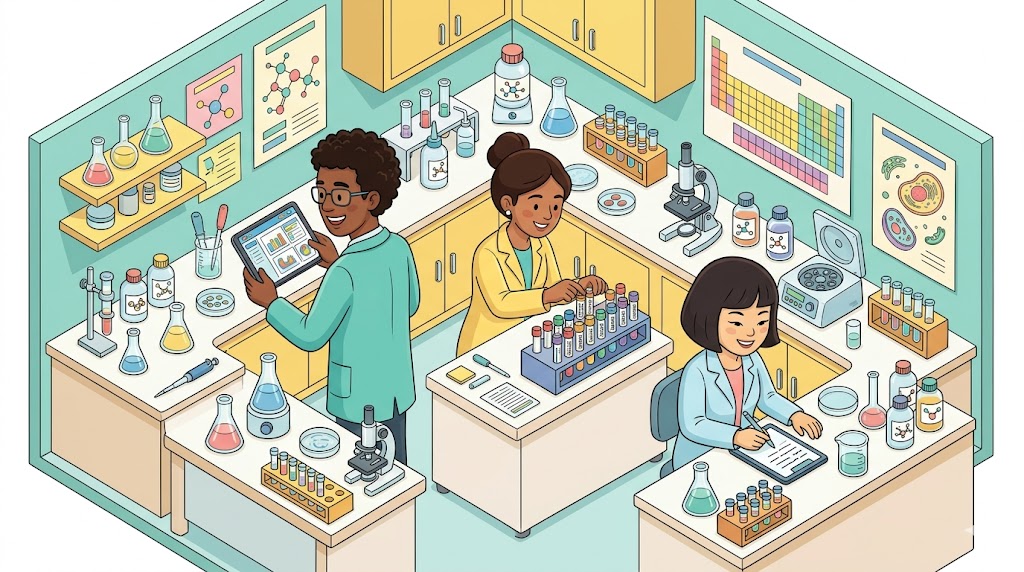
Have you ever walked into a science lab and felt amazed by all the cool tools, colorful liquids, and busy scientists? Labs are incredible places where people make discoveries that can change the world. But here’s a secret — a lab only works well when someone takes good care of it. That’s called lab management, and it’s way more important than most people think!
What Is Lab Management?
Think of a lab like a big, busy kitchen. If no one washes the dishes, buys new ingredients, or keeps things in the right place, cooking becomes a total mess. A lab is the same way. Lab management means keeping everything organized, safe, and running smoothly — so scientists can focus on doing amazing experiments instead of searching for missing stuff.
Someone called a Lab Manager is in charge of all of this. They make sure supplies never run out, equipment is clean and working, rules are followed, and everyone on the team knows what to do.
“A well-managed lab is like a well-oiled machine — when everything is in its place, scientists can do their best work!”
The 5 Big Jobs of a Lab Manager
1. Keeping Track of Supplies Making sure the lab never runs out of things like test tubes, gloves, or special chemicals. It’s like keeping the kitchen pantry stocked!
2. Keeping Everyone Safe Labs can have dangerous chemicals or sharp tools. The lab manager makes sure everyone follows safety rules so nobody gets hurt.
3. Watching the Budget Labs cost money to run. The manager decides what to buy and makes sure they don’t spend too much — like a shopping list with a limit!
4. Fixing and Maintaining Equipment Microscopes, centrifuges, and other machines need regular check-ups — just like a car needs an oil change. The manager schedules these tune-ups.
5. Leading the Team Scientists are smart, but they still need a leader. The lab manager helps people work together, learn new things, and stay happy at work.
Why Smart Tools Make Everything Better
In the old days, lab managers used paper notebooks and spreadsheets to keep track of everything. That worked, but it was slow and easy to make mistakes. Imagine trying to find one sheet of paper in a stack of 500 — yikes!
Today, labs use digital tools that store everything on a computer. There are three big types:
ELN (Electronic Lab Notebook) — Like a digital diary for experiments. Scientists write down what they did, and the computer saves it safely so it can never get lost or spilled on!
LIMS (Lab Information Management System) — Like a super-smart filing cabinet. It keeps track of all the samples, where they are stored, and when they expire. No more lost samples!
Inventory Management System — Like a grocery list that updates itself! It tells you when supplies are running low and can even order new ones automatically.
Keeping the Lab Safe
Safety is the number one rule in any lab. Some chemicals can be dangerous, and some tools are very sharp or very hot. A good lab manager creates rules everyone must follow, makes sure everyone wears the right gear (like gloves and goggles), and checks that nothing expired or broken is being used.
Digital platforms also help with this by sending automatic alerts — like a smoke alarm for your supplies. If a chemical is about to expire, the system sends a message before anyone uses it by accident
Teamwork Makes the Dream Work
A lab isn’t just one person — it’s a whole team of scientists, assistants, and managers all working together. Good lab management means everyone knows their job, shares information easily, and supports each other. When one person finds something important, everyone else can see it right away through the shared digital system.
“When a lab is organized and everyone works together, amazing discoveries happen faster!”
The Bottom Line
Running a lab takes a lot of work behind the scenes. It’s not just about exciting experiments — it’s about keeping things organized, safe, stocked, and running smoothly every single day. The best labs use a combination of great leadership and smart digital tools to make sure nothing falls through the cracks.
Whether you’re a scientist, a student, or just someone curious about how labs work — now you know the secret: a great lab manager is the unsung hero of every big discovery.